
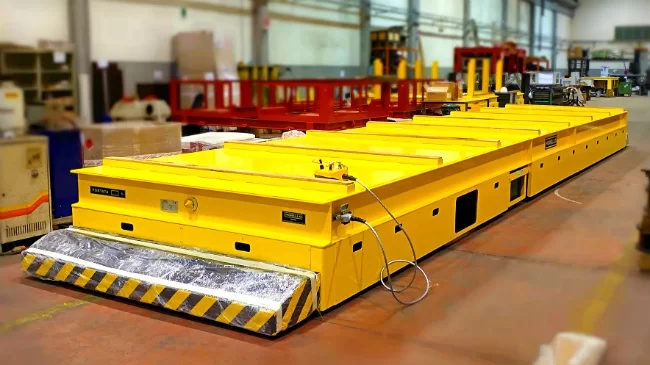
In today’s demanding industrial environments, the efficient transportation of heavy materials is critical for operational success. Electric platform trolleys with 20-ton capacity represent the pinnacle of heavy load handling technology, offering unparalleled performance. These sophisticated transport solutions combine robust engineering with advanced electric drive systems to deliver reliable performance in challenging conditions. Designed specifically for moving substantial loads over significant distances, these trolleys provide industrial engineers and operations directors with a versatile, environmentally friendly alternative to traditional material handling equipment. This article explores the essential features that make 20-ton electric platform trolleys invaluable assets for companies managing oversized components, long materials, and heavy equipment. By understanding these capabilities, you can make informed decisions about implementing the right heavy-duty transportation system for your specific operational requirements.
Key features of the electric platform trolleys
When operations demand the movement of exceptionally heavy loads, standard material handling equipment simply won’t suffice. Electric platform trolleys with 20-ton capacity represent specialized engineering solutions designed specifically for industries where substantial weight transportation is a daily requirement. These robust machines combine powerful electric drive systems with precision control mechanisms to safely manage loads that would overwhelm conventional equipment.
The modern 20-ton electric platform trolley integrates advanced engineering principles with practical operational features to create a versatile transportation system for shipyards, heavy manufacturing, aerospace facilities, and large-scale construction projects. What distinguishes these high-capacity trolleys is their ability to distribute substantial weight across reinforced chassis designs while maintaining maneuverability in confined spaces.
Unlike diesel-powered alternatives, these electric systems offer zero-emission operation, making them suitable for both indoor and outdoor applications without environmental concerns. The integration of regenerative braking technology further enhances their efficiency by recovering energy during deceleration phases, extending operational runtime between charging cycles.
For operations directors and industrial engineers evaluating heavy material handling solutions, understanding the specific capabilities and features of these specialized trolleys is essential for optimizing workflow, ensuring safety compliance, and maximizing return on investment across diverse industrial applications.
Core engineering specifications of electric platform trolleys
The foundation of any high-capacity electric platform trolley lies in its engineering specifications, which must be meticulously designed to handle extreme loads while maintaining operational efficiency. A standard 20-ton capacity trolley typically features dimensions of approximately 12,000 x 2,500 mm, providing ample surface area for transporting oversized components and long materials exceeding 12 meters.
At the heart of these robust systems are AC drive motors, selected for their superior torque characteristics and reliability under sustained heavy-load conditions. These motors enable controlled travel speeds of approximately 20 meters per minute – a rate optimized for safely transporting substantial weights while maintaining precise positioning capabilities.
The structural framework incorporates reinforced steel construction with strategic load distribution points to prevent chassis deformation under maximum capacity. Large-diameter hard rubber wheels are specifically engineered to handle concentrated weight while providing the necessary traction across various industrial surfaces including concrete, resin floors, and asphalt.
Front axle steering mechanisms, powered by dedicated AC motors, ensure responsive directional control even when navigating with full payload. This steering configuration allows operators to maneuver with precision in confined spaces – a critical requirement in busy manufacturing environments and shipyards where space utilization is paramount.
The loading platform itself features removable hardwood coverings, providing both protection for transported materials and a sacrificial surface that can be replaced when worn without requiring complete trolley refurbishment. This practical design consideration significantly extends operational lifespan while reducing maintenance costs.
Advanced battery and power management systems
The operational efficiency of 20-ton electric platform trolleys depends heavily on their power management capabilities. These sophisticated systems utilize various battery technologies tailored to specific operational requirements, offering flexibility in balancing performance, cost, and maintenance considerations.
Battery technology options for heavy-duty electric trolleys include:
- Lead-acid batteries – Traditional, cost-effective solutions providing reliable performance with established maintenance protocols
- Gel batteries – Offering improved cycle life and reduced maintenance requirements compared to standard lead-acid variants
- Lithium-ion batteries – Premium solution featuring faster charging times, longer operational life, and superior energy density for extended runtime between charges
What truly distinguishes modern electric platform trolleys is their intelligent power management systems. These incorporate regenerative braking technology that captures kinetic energy during deceleration and converts it back into electrical energy, extending battery life significantly during repetitive stop-start operations common in industrial settings.
The power management controllers continuously optimize motor performance based on load conditions, terrain variations, and battery charge levels. This adaptive approach ensures consistent performance throughout the discharge cycle while protecting battery cells from damaging deep-discharge conditions.
With typical operational ranges of approximately 5 kilometers per charge cycle, these systems are engineered for intensive industrial shifts. Advanced battery monitoring systems provide operators with real-time feedback on remaining capacity, allowing for strategic recharging scheduling that minimizes operational disruptions while maximizing battery service life.
Safety features and operational controls
When managing equipment capable of transporting 20-ton loads, safety becomes paramount in both design and operation. Modern electric platform trolleys incorporate multiple safety systems that protect operators, nearby personnel, and the transported materials themselves.
At the forefront of these safety features are sensitive bumper systems strategically positioned at both front and rear sections of the trolley. These pressure-sensitive devices instantly halt trolley movement upon contact with obstacles or personnel, creating an essential safety perimeter around the equipment during operation. This automated emergency stopping capability is particularly valuable in busy industrial environments where visibility may be compromised.
Operator control systems offer flexibility through dual interface options. The standard wired pendant panel provides reliable, direct control for routine operations, while optional wireless remote controllers allow operators to maintain visual contact with load and surroundings from optimal vantage points. This capability proves invaluable when navigating through congested work areas or positioning loads in confined spaces.
Additional safety elements include audible movement warnings, emergency stop buttons accessible from multiple positions, and automatic braking systems that engage when controls are released. Sophisticated load monitoring systems continuously assess weight distribution across the platform, alerting operators to potentially unstable conditions before movement begins.
For enhanced operational safety, these trolleys feature progressive acceleration and deceleration profiles that prevent sudden load shifts, along with speed governors that automatically adjust maximum velocity based on load weight. These intelligent control systems ensure that even inexperienced operators can safely manage substantial loads while maintaining workplace safety standards.
Versatility across industrial environments
The true value of 20-ton electric platform trolleys lies in their exceptional adaptability across diverse industrial settings. These robust transportation solutions effectively bridge the gap between indoor precision handling and outdoor heavy-duty applications, offering operational continuity throughout complex manufacturing and logistics processes.
In shipbuilding environments, these trolleys excel at transporting lengthy hull sections, propulsion components, and outfitting modules across expansive yard facilities. Their zero-emission electric drive systems allow seamless transitions between outdoor fabrication areas and enclosed assembly halls without environmental concerns or operational interruptions.
Heavy manufacturing facilities benefit from the trolleys’ ability to navigate both smooth concrete floors and rougher transitional surfaces. The specialized wheel design, featuring large-diameter hard rubber composition, provides consistent traction across varying surfaces including polished concrete, textured resin floors, and asphalt pathways. This surface versatility eliminates transfer points that would otherwise create workflow bottlenecks.
Energy sector applications demonstrate another dimension of these trolleys’ adaptability. When configured with appropriate safety features, they can transport turbine components, transformer assemblies, and generator modules through power plant construction sites where terrain conditions frequently change as development progresses.
Environmental adaptability further extends their utility, with sealed electrical systems designed to withstand exposure to dust, moisture, and temperature variations typical in industrial settings. This robust engineering approach ensures reliable operation in coastal shipyards with salt-laden air, dusty manufacturing facilities, and outdoor construction environments subject to weather variations, making these electric platform trolleys truly versatile material handling solutions.
Customization options for specialized applications
While standard 20-ton electric platform trolleys offer impressive capabilities, MORELLO recognizes that many industrial applications require specialized solutions tailored to unique operational challenges. The company’s engineering approach centers on adaptable designs that can be modified to address specific industry requirements without compromising core performance characteristics.
Platform dimensions represent one of the most frequently customized aspects, with configurations available well beyond the standard 12,000 x 2,500 mm footprint. Operations involving exceptionally long components can utilize extended platforms, while facilities with narrow transfer aisles may opt for more compact designs with reinforced load distribution systems.
For environments with hazardous materials or potentially explosive atmospheres, ATEX and IEC Ex compliant versions incorporate specialized electrical shielding, spark-resistant components, and thermal monitoring systems. These safety-critical modifications enable operations in chemical processing facilities, munitions manufacturing, and certain energy production environments where standard electrical equipment would pose unacceptable risks.
Advanced automation represents another customization frontier, with AGV (Automated Guided Vehicle) capabilities available for integration into automated production lines. These systems utilize various navigation technologies including magnetic tape following, laser guidance, or vision-based systems to eliminate the need for manual operation in repetitive transport routes.
Load interface customizations address the specific characteristics of transported materials. Options include specialized clamping systems for secure transportation of cylindrical objects, adjustable supports for irregularly shaped components, and cushioned mounting points for vibration-sensitive equipment. The platform surface itself can be customized with various materials beyond standard hardwood, including non-marking composites, anti-static surfaces, or corrosion-resistant metals for specialized chemical environments.
Unlocking industrial efficiency with advanced material handling
The features that define 20-ton electric platform trolleys represent the culmination of precision engineering, safety-focused design, and adaptable technology working in harmony to solve complex material handling challenges. For industrial operations managing substantial loads, these specialized transportation solutions offer the ideal balance of power, control, and environmental responsibility. By eliminating emissions while maintaining exceptional load capacity, these systems align with both operational efficiency goals and sustainability initiatives increasingly important across global industries.
Whether your operation requires the movement of lengthy shipbuilding components, heavy manufacturing assemblies, or specialized energy sector equipment, MORELLO‘s customizable electric platform trolleys provide the foundation for optimized material flow and enhanced productivity. To explore how these advanced transportation solutions can be tailored to your specific operational requirements, discover our complete range of battery-powered trolley solutions and connect with our engineering team for a consultation on your heavy material handling needs.