
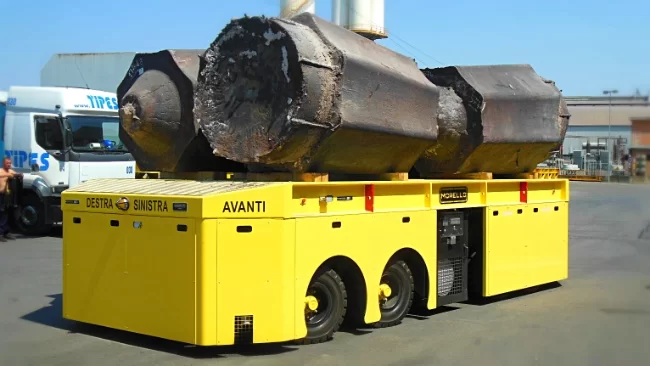
When industrial operations demand the movement of exceptionally heavy loads, standard transportation equipment simply won’t suffice. MORELLO’s 130-ton heavy-duty transport solutions represent the pinnacle of industrial material handling technology, specifically engineered for steel mills and heavy manufacturing environments where reliability cannot be compromised. These robust self-propelled transporters combine innovative design with powerful performance capabilities to safely and efficiently move massive steel components across mill yards and production facilities. For operations managers and industrial engineers tasked with optimizing material flow in high-capacity environments, understanding the capabilities and advantages of these specialized transport solutions is essential for maintaining productivity and operational excellence.
Engineering excellence: the anatomy of our transport solutions
The foundation of any effective heavy material handling system begins with understanding the engineering principles behind our transport solutions. MORELLO’s self-propelled transporters represent a significant advancement in material handling technology, particularly for steel mill environments where massive loads must be moved with precision and reliability.
At the core of these robust machines is a framework designed specifically to distribute weight evenly across multiple points of contact. The SGP3 model features 16 superelastic wheels that work in concert to support loads up to 130 tons while maintaining structural integrity. This wheel configuration isn’t arbitrary—it’s the result of extensive engineering calculations that determine the optimal distribution of pressure to prevent floor damage and ensure stable transport.
What truly distinguishes the best heavy-duty transporters for large loads is their power system architecture. Traditional hydraulic systems have long been the standard for heavy equipment, but MORELLO has pioneered an alternative approach. By incorporating a 150 kW diesel generating set, these transporters power electric motors rather than hydraulic ones. This hybrid design offers multiple advantages:
- Reduced maintenance requirements: Hydraulic systems demand constant attention due to the potential for leaks, contamination, and component wear. Electric drive systems eliminate many of these concerns, resulting in significantly lower maintenance costs and reduced downtime.
- Enhanced control precision: Electric motors provide more responsive and accurate control over movement, allowing for millimetric positioning even with massive loads.
- Improved fuel efficiency: The diesel-electric configuration optimizes fuel consumption by allowing the generator to operate at its most efficient RPM regardless of the transporter’s speed.
- Lower environmental impact: Reduced fuel consumption translates directly to lower emissions, an increasingly important consideration for industrial operations worldwide.
The structural design incorporates a platform measuring 6,000 x 3,000 mm, though custom dimensions are available to accommodate specific operational requirements. This platform isn’t merely a flat surface—it’s engineered with load-bearing reinforcements strategically positioned to support concentrated weight points that commonly occur when transporting steel materials.
Have you considered how these massive transporters maintain stability on uneven surfaces? The answer lies in the sophisticated suspension system. Each pair of wheels is mounted on an oscillating axle, which itself is connected to a rocker arm mechanism. This multi-stage suspension configuration allows the transporter to navigate uneven floors without overloading any single wheel or axle. The system constantly redistributes weight as the machine encounters surface irregularities, maintaining optimal contact and preventing dangerous load shifts.
The drivetrain incorporates AC motors for both propulsion and steering functions. This electrical architecture enables precise speed control with programmable acceleration and deceleration ramps. Unlike hydraulic systems that can experience “jerky” movements during startup or directional changes, the electric drive provides smooth transitions that protect both the load and the equipment.
Speed capabilities reach up to 60 meters per minute when fully loaded—a considerable pace considering the massive weights involved. This velocity is carefully regulated through advanced control systems that monitor numerous parameters including weight distribution, surface conditions, and operational commands.
For operations managers and industrial engineers evaluating 130-ton heavy-duty transport solutions, understanding the relationship between speed, power, and control is essential. These transporters aren’t designed merely to move heavy objects—they’re engineered to integrate seamlessly into production workflows where timing and positioning precision directly impact overall productivity.
The frame construction utilizes high-tensile steel alloys specifically selected for their strength-to-weight ratio. This material choice optimizes the transporter’s own weight while ensuring it can safely handle loads many times its own mass. Strategic reinforcement points are incorporated throughout the structure, particularly at stress concentration areas identified through finite element analysis during the design phase.
What often goes unnoticed in these sophisticated machines is the integration of sensors and monitoring systems. Real-time feedback on weight distribution, drive system performance, and mechanical stress allows operators to maintain optimal operating conditions and helps prevent potential equipment failures before they occur. This predictive capability represents a significant advancement over traditional heavy transport equipment that relied primarily on visual inspection and scheduled maintenance.
When evaluating the best heavy-duty transporters for large loads, the engineering details make all the difference between adequate performance and exceptional reliability. The 130-ton capacity represents not just a weight rating but a carefully calibrated system where every component works in harmony to deliver consistent performance under the most demanding industrial conditions.
Electric drive advantages: performance and sustainability in heavy load handling
The transition from traditional hydraulic drives to electric propulsion systems represents one of the most significant advancements in heavy load transport technology. In MORELLO’s transport solutions, this electric drive architecture delivers transformative benefits that extend far beyond simple movement capabilities.
At the heart of these sophisticated transporters is a diesel-electric hybrid system that fundamentally changes how power is generated and utilized. Rather than directly powering hydraulic pumps and motors, the 150 kW diesel generator produces electricity that drives AC motors connected to each wheel assembly. This seemingly subtle distinction creates profound operational advantages that directly impact productivity, cost-effectiveness, and environmental responsibility.
The precision control afforded by electric drives cannot be overstated. When handling loads weighing up to 130 tons, the ability to make minute adjustments becomes critical—particularly in confined spaces or when positioning heavy components for assembly operations. Electric motors respond instantaneously to input commands, allowing operators to achieve millimetric positioning accuracy even with massive loads. This level of control is virtually impossible with conventional hydraulic systems, which inherently suffer from fluid compression issues and valve response limitations.
Consider the challenge of gradually accelerating a 130-ton steel component without causing it to shift or become unstable. Electric drives excel in this scenario because they offer infinitely variable torque control from zero speed. The potentiometric control system implemented in these transporters enables perfectly gradual acceleration and deceleration ramps, eliminating the jerky movements that often plague hydraulic systems during startup and directional changes.
From an energy efficiency perspective, the electric drive configuration delivers substantial advantages. Conventional hydraulic systems constantly circulate fluid under pressure, consuming energy even during idle periods. By contrast, electric motors draw power only when actively performing work. This operational characteristic, combined with the ability to precisely match generator output to actual demand, results in fuel consumption reductions of up to 30% compared to equivalent hydraulic systems.
Maintenance requirements represent another area where electric drives demonstrate clear superiority. Hydraulic systems demand rigorous and frequent maintenance due to their inherent complexity and vulnerability to contamination. Even microscopic particles in hydraulic fluid can cause accelerated component wear and system failures.
Electric drive systems eliminate most of these concerns. With significantly fewer moving parts and no pressurized fluid to maintain, these systems require minimal routine service. The primary maintenance points are limited to basic generator maintenance (similar to any diesel engine) and occasional bearing inspections for the electric motors. This reduction in maintenance translates directly to increased uptime and lower operational costs over the equipment’s lifecycle.
The environmental benefits of electric drives extend beyond reduced fuel consumption. By eliminating hydraulic fluid, these systems remove the risk of ground contamination from leaks—a serious concern in many industrial settings. Additionally, the more efficient power utilization results in lower emissions per ton of material moved, helping operations meet increasingly stringent environmental regulations.
For facility managers and operations directors evaluating the best heavy duty transporters for large loads, the noise reduction offered by electric drives presents another significant advantage. Hydraulic systems typically generate considerable noise from pumps, pressure relief valves, and fluid movement through lines. Electric motors operate much more quietly, creating a safer and more comfortable working environment for personnel.
The diagnostic capabilities inherent in electric drive systems provide yet another operational benefit. Modern electric motors incorporate sophisticated monitoring systems that continuously evaluate performance parameters including temperature, current draw, and rotational characteristics. This data allows for predictive maintenance approaches, where potential issues can be identified and addressed before they result in failures or unplanned downtime.
When implementing transport solutions in steel mill environments, the resilience of electric drives to harsh conditions becomes particularly valuable. Unlike hydraulic systems, which can experience fluid viscosity issues in extreme temperatures, electric motors maintain consistent performance across a wide operating range. This reliability ensures that material handling operations can continue uninterrupted regardless of environmental conditions.
The scalability of electric drive technology also deserves consideration. As industrial operations evolve and capacity requirements change, electric systems can often be upgraded through software modifications and minor hardware changes rather than complete system overhauls. This adaptability protects the initial investment and allows the equipment to evolve alongside operational needs.
For industries increasingly focused on sustainability metrics and carbon footprint reduction, the electric drive advantage represents a compelling proposition. These systems deliver not just improved performance and reduced maintenance, but a clear path toward more environmentally responsible heavy material handling operations.
Advanced steering and suspension systems for uneven terrain navigation
Moving 130-ton loads across industrial environments presents unique challenges, particularly when dealing with less-than-ideal surface conditions. MORELLO’s heavy-duty transport solutions incorporate sophisticated steering and suspension technologies specifically designed to overcome these challenges, ensuring safe and efficient operation even on uneven terrain.
The standard configuration of these transporters features eight-wheel steering capability, allowing for precise directional control despite the massive weight being carried. This steering system enables the transporter to navigate through complex industrial layouts with tight corners and limited maneuvering space. For applications requiring even greater maneuverability, MORELLO offers an enhanced configuration with all sixteen wheels providing steering functionality, dramatically reducing the turning radius and enabling operation in the most space-constrained environments.
What makes this steering system truly remarkable is its integration with the electric drive architecture. Each steering motor utilizes AC technology, providing the same responsive control and reliability benefits found in the propulsion system. This unified approach to power delivery creates a cohesive operational experience where steering and propulsion work in perfect harmony, responding instantly to operator commands without the lag often experienced in hydraulic steering systems.
The suspension design represents perhaps the most critical aspect of these transporters’ ability to navigate uneven terrain. Industrial environments rarely offer perfectly flat surfaces—concrete floors develop cracks and uneven sections over time, outdoor yards feature variable surfaces, and transitions between different areas often create challenging elevation changes. Conventional heavy-duty transporters with rigid frames would concentrate enormous pressure on whatever wheels happen to bear the weight at these transition points, potentially causing equipment damage and unsafe load shifting.
MORELLO’s solution to this challenge is a multi-stage articulation system that maintains optimal weight distribution regardless of surface conditions. The foundation of this system begins with the wheel arrangement. Each pair of wheels is mounted on an oscillating axle that can pivot independently, allowing the wheels to maintain ground contact even when encountering moderate surface irregularities.
These oscillating axles are then connected to rocker arm assemblies that provide a second layer of articulation. When one section of the transporter encounters an elevation change, the rocker arm system redistributes the load across multiple wheel sets, preventing any single component from bearing excessive weight. This mechanical load-sharing happens instantaneously and continuously as the transporter moves, requiring no operator intervention.
The benefits of this sophisticated suspension architecture extend far beyond simply maintaining stability. By ensuring consistent ground contact across all wheels, the system maximizes available traction—a critical factor when moving loads weighing up to 130 tons. This traction optimization allows the transporter to navigate slight inclines and operate safely in environments where surface conditions might vary due to environmental factors or industrial debris.
For facility managers evaluating the best heavy duty transporters for large loads, the implications of this advanced suspension system are significant. The ability to operate effectively across variable terrain means these transporters can connect different production areas without requiring perfectly maintained pathways. This flexibility can substantially reduce infrastructure costs and eliminate operational bottlenecks that might otherwise occur at transition points.
The steering system’s integration with the control architecture provides additional operational benefits. The precision of the steering system becomes particularly evident during final positioning operations. When placing heavy components for manufacturing processes or loading them for shipment, operators can achieve exact alignment without the need for secondary positioning equipment. This capability eliminates transfer steps in the production process, reducing both time requirements and potential damage risks associated with multiple handling operations.
From a safety perspective, the combination of advanced steering and suspension systems creates significant advantages. The consistent weight distribution prevents sudden load shifts that could potentially create dangerous situations. Additionally, the responsive steering control allows operators to make quick directional adjustments if unexpected obstacles appear in the transport path.
Durability represents another key benefit of MORELLO’s approach to suspension and steering design. By preventing any single component from experiencing excessive stress, the system extends the operational life of wheels, bearings, and structural elements. This design philosophy focuses on distributing forces rather than simply building components strong enough to withstand them—a more sophisticated approach that results in greater long-term reliability.
Control options and safety features for precision material movement
When managing loads of up to 130 tons, the interface between operator and machine becomes critically important. MORELLO’s heavy-duty transport solutions offer sophisticated control systems that prioritize both operational precision and comprehensive safety. These control mechanisms represent the culmination of extensive research into human-machine interaction within industrial environments, where split-second decisions and millimeter-perfect positioning can make the difference between smooth operations and costly disruptions.
Operators of these specialized transporters can choose between two primary control interfaces, each offering distinct advantages depending on the specific operational context. The pendant control panel provides a traditional, physical interface with tactile buttons, switches, and potentiometers that deliver immediate feedback. This control option excels in environments where the operator needs to maintain close visual contact with the load while still having direct manual control over movement parameters.
Alternatively, the radio remote control system offers complete freedom of movement, allowing the operator to position themselves at the optimal vantage point for any given operation. This wireless control solution proves invaluable when navigating through complex facility layouts or positioning loads in areas with limited visibility from a fixed position. The remote system maintains the same comprehensive control capabilities as the pendant panel, ensuring no sacrifice in functionality while gaining significant advantages in operational flexibility.
Both control systems incorporate potentiometric acceleration control—a sophisticated feature that enables infinitely variable speed adjustment. Unlike basic on/off or high/low speed controls found in less advanced equipment, this potentiometric system allows operators to precisely match movement speed to the specific requirements of each task. The practical implications of this capability become evident when considering the momentum involved with 130-ton loads. The ability to accelerate and decelerate gradually eliminates the risk of load shifting while also reducing mechanical stress on the transporter itself.
The control interfaces connect to an advanced electronic control unit (ECU) that serves as the central nervous system of the transporter. This ECU continuously monitors dozens of operational parameters including:
This comprehensive monitoring creates multiple layers of operational protection. Should any parameter exceed safe operating thresholds, the system can automatically adjust performance or, if necessary, initiate controlled shutdown procedures to prevent damage or unsafe conditions. This proactive approach to system management represents a significant advancement over reactive safety systems found in conventional heavy equipment.
For facility managers evaluating the best heavy-duty transporters for large loads, the intuitive nature of these control systems offers substantial workforce advantages. The learning curve for new operators is significantly reduced through logical control layouts and consistent response characteristics. This intuitive design reduces training requirements while simultaneously improving operational safety—a dual benefit that directly impacts both productivity and risk management.
These sophisticated movement capabilities prove particularly valuable in manufacturing environments where heavy components must be precisely positioned for assembly operations. The ability to make minute adjustments eliminates the need for secondary positioning equipment, streamlining workflows and reducing handling steps that could potentially introduce damage risks.
Safety features integrated throughout the control architecture create multiple redundant protection layers. Emergency stop functions are accessible from both control interfaces and at strategic positions around the transporter itself. These emergency systems don’t simply cut power—they initiate controlled deceleration protocols that bring the load to a safe stop without creating additional hazards through sudden movement changes.
Visual and audible warning systems alert nearby personnel whenever the transporter is in operation. These warning mechanisms automatically adjust their intensity based on the specific movement being performed, with higher-risk operations triggering enhanced notification levels. This adaptive approach maintains safety awareness without creating unnecessary disruption during routine movements.
For operations requiring integration with broader facility management systems, these transporters offer communication interfaces that enable coordination with production control networks. This connectivity allows for synchronized material movement based on production schedules, inventory requirements, or other operational parameters. The ability to incorporate transport solutions into comprehensive facility management frameworks represents a significant advancement in industrial logistics optimization.
The control systems also incorporate diagnostic capabilities that simplify maintenance and troubleshooting. Technicians can access detailed operational data and system status information through dedicated service interfaces. This diagnostic access reduces downtime by enabling rapid identification of any potential issues before they develop into significant problems requiring extensive repairs.
For industries operating under stringent safety regulations, these transporters can be configured with additional specialized safety features including personnel detection systems, load monitoring sensors, and operational boundary enforcement. These enhanced safety capabilities ensure compliance with workplace safety requirements while maintaining operational efficiency.
The combination of intuitive control interfaces, comprehensive monitoring systems, and multi-layered safety features creates an operational environment where even the most challenging material handling tasks can be executed with confidence and precision. This sophisticated approach to machine control represents a fundamental component of MORELLO’s philosophy that effective heavy material handling requires not just raw power, but intelligent application of that power through advanced control systems.
Customization capabilities for global industrial applications
Industrial operations across different sectors and regions face unique challenges that demand specialized solutions rather than one-size-fits-all approaches. MORELLO’s 130-ton heavy-duty transport solutions stand out in the market precisely because of their extensive customization capabilities, allowing each transporter to be tailored to the specific operational requirements of diverse industrial environments worldwide.
The foundation of MORELLO’s customization philosophy begins with understanding that while the basic function—moving extremely heavy loads safely and efficiently—remains constant, the specific parameters surrounding that function vary tremendously across different applications. A steel mill in North America may have different facility layouts, operational protocols, and regulatory requirements than a similar facility in Asia or Europe. The company’s global presence, with implementations across six continents, has created a deep repository of application-specific knowledge that informs their customization process.
Platform dimensions represent one of the most fundamental customization variables. While the standard configuration measures 6,000 x 3,000 mm, this can be modified extensively based on the specific materials being transported. Facilities handling longer steel beams might require extended length platforms, while those moving large machinery components might need wider configurations. These dimensional modifications aren’t simply about scaling the basic design—they require comprehensive engineering recalculations to ensure that load distribution, structural integrity, and operational characteristics remain optimal regardless of the modified dimensions.
Load capacity customization extends beyond the standard 130-ton rating. For operations with more demanding requirements, MORELLO can engineer solutions capable of handling over 500 tons. This dramatic capacity increase involves substantial modifications to the structural framework, power systems, and wheel configurations. Each component must be carefully redesigned to maintain the same reliability and performance characteristics at these extreme weight levels.
Power source options provide another significant customization pathway. While the diesel-electric hybrid configuration offers exceptional flexibility for most applications, some operational environments have specific requirements that demand alternative approaches.
For facilities with specialized workflow requirements, MORELLO offers automation capabilities that transform these transporters from operator-controlled equipment into automated guided vehicles (AGVs). This automation option incorporates sophisticated navigation systems, obstacle detection sensors, and integration with facility management software. The resulting AGV systems can operate autonomously within defined pathways, responding to transport requests from production control systems and coordinating with other facility equipment to optimize material flow.
Regulatory compliance represents another critical customization dimension. Industrial facilities operating in hazardous environments or handling potentially explosive materials must adhere to stringent safety standards. MORELLO’s customization capabilities include ATEX and IECEx conformity options, allowing these transporters to operate safely in environments where standard equipment would present unacceptable risks. These specialized configurations incorporate modified electrical systems, sealed components, and specialized materials that prevent potential ignition sources.
For operations spanning multiple production areas with varying environmental conditions, climate adaptation packages provide essential functionality. These customization options might include enhanced cooling systems for high-temperature environments, specialized sealing for dusty or corrosive atmospheres, or cold-weather packages for facilities in extreme northern regions. These environmental adaptations ensure consistent performance regardless of ambient conditions, maintaining productivity throughout the year.
The best heavy-duty transporters for large loads must also adapt to facility-specific interface requirements. MORELLO’s customization capabilities extend to the integration points between the transporter and other production equipment. Custom docking interfaces, specialized loading/unloading mechanisms, and purpose-designed transfer systems ensure seamless interaction with existing facility infrastructure, eliminating potential bottlenecks in material flow.
Control system customization allows these transporters to match the specific operational protocols of each facility. This might include specialized control layouts familiar to existing equipment operators, integration with facility-wide emergency systems, or custom operational parameters that reflect specific safety requirements or production constraints. These control adaptations ensure that the transporter becomes a natural extension of existing operational practices rather than requiring significant workflow adjustments.
Documentation and training packages represent a final but crucial customization dimension. MORELLO provides tailored documentation in multiple languages, with specialized training programs designed around the specific configuration delivered to each customer. This customized knowledge transfer ensures that operators and maintenance personnel can maximize the capabilities of their specific transporter configuration, regardless of their location or previous experience with similar equipment.
The breadth of these customization capabilities transforms MORELLO’s transport solutions from standardized products into purpose-built systems optimized for specific operational environments. This adaptability has established the company as a preferred partner for multinational corporations operating diverse facilities across global markets, where consistent performance must be maintained despite varying local conditions and requirements.
Engineered excellence for your most demanding transport challenges
MORELLO‘s 130-ton heavy-duty transport solutions represent the pinnacle of material handling engineering, combining robust structural design with sophisticated control systems and customizable features. These transporters deliver exceptional performance across diverse industrial environments, from steel mills to manufacturing facilities worldwide. The electric drive system, advanced suspension architecture, and precision control options work in harmony to ensure safe, efficient movement of massive loads even in challenging conditions. For operations managers and industrial engineers facing complex material handling requirements, these specialized transporters offer a proven solution that enhances productivity while reducing operational costs and environmental impact.
Ready to transform your heavy material handling operations? Contact MORELLO today to discuss how our customized heavy-duty transport solutions can address your specific challenges and optimize your production workflow. Our engineering team will work with you to develop a tailored solution that meets your exact requirements, delivering the performance and reliability your operations demand.