
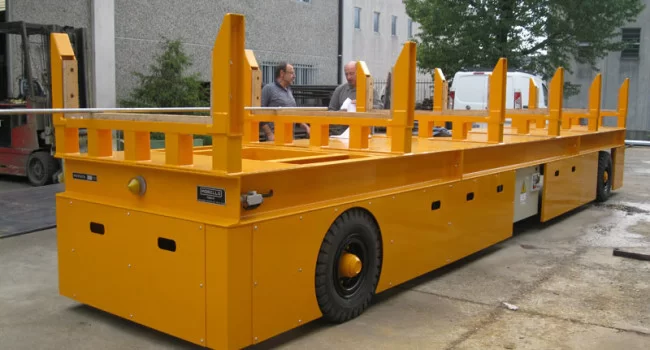
In today’s industrial landscape, efficient material handling is crucial for maintaining operational excellence. Self-propelled trolleys with pneumatic tyres represent a significant advancement in the transportation of heavy loads across diverse industrial environments. These specialized vehicles combine the maneuverability of self-propelled systems with the adaptability of pneumatic tires, creating an optimal solution for challenging material transport requirements. At MORELLO, we’ve engineered these trolleys to address the specific needs of industries dealing with substantial weights, irregular surfaces, and complex facility layouts. Whether you’re managing a steel plant, energy facility, or large-scale construction project, these robust material handling solutions deliver exceptional performance while prioritizing safety and efficiency. Our self-propelled trolleys are designed to navigate both indoor and outdoor environments with equal capability, offering the versatility demanded by modern industrial operations while reducing manual labor and minimizing the risk of workplace injuries.
The engineering behind self-propelled trolleys
Self-propelled trolleys represent a sophisticated convergence of mechanical engineering, power systems, and ergonomic design. These specialized material handling solutions are built around a robust steel framework capable of supporting substantial loads while maintaining structural integrity even under continuous stress. The self-propulsion system typically incorporates high-torque electric motors powered by industrial-grade batteries, eliminating the need for external power sources or manual pushing.
The pneumatic tire system forms a critical component of these trolleys, offering several technical advantages over solid rubber or polyurethane alternatives. These air-filled tires provide superior shock absorption when traversing uneven surfaces, effectively protecting both the transported materials and the trolley’s internal components from damaging vibrations. The larger contact patch of pneumatic tires distributes weight more evenly, reducing ground pressure and enabling operation on sensitive flooring or unpaved terrain.
Control systems in modern self-propelled trolleys range from simple tiller-arm steering mechanisms to sophisticated programmable logic controllers that enable precise movement. Many MORELLO’s models feature variable speed control, allowing operators to adjust velocity based on load characteristics and environmental conditions. The integration of safety features such as emergency stop buttons, anti-collision sensors, and automatic braking systems ensures that these powerful machines can be operated safely even in busy industrial environments with multiple personnel present.
Key advantages of battery-operated trolley systems for heavy materials
Battery-operated trolley systems with pneumatic tires deliver substantial operational benefits that make them invaluable for demanding material transport scenarios. These advantages extend beyond mere convenience to impact productivity, safety, and overall operational efficiency.
The most immediate benefit is the elimination of manual labor required to move heavy loads. A single operator can safely transport materials weighing several tons without physical strain, dramatically reducing workplace injuries and associated costs. This capability proves particularly valuable when handling awkward or oversized items like steel pipes, concrete panels, or industrial machinery components.
Environmental versatility represents another significant advantage. Unlike traditional tow tractors or forklifts, battery-operated trolleys with pneumatic tires can transition seamlessly between indoor facilities and outdoor yards. The pneumatic tires absorb shock when moving over uneven terrain, while the self-contained power system eliminates the need for external power sources or exhaust ventilation.
Additional operational benefits include:
- Zero emissions during operation, supporting environmental compliance and indoor air quality
- Reduced noise levels compared to combustion-powered alternatives
- Lower total cost of ownership through reduced maintenance requirements
- Enhanced maneuverability in confined spaces compared to tractor-trailer configurations
- Ability to customize speed, acceleration, and braking characteristics to match specific materials
These advantages make battery-operated trolleys particularly valuable in facilities where traditional material handling equipment faces limitations due to space constraints, surface conditions, or environmental concerns.
Industrial applications: from steel plants to construction sites
Self-propelled trolleys have proven their versatility across diverse industrial sectors, with each application showcasing their unique capabilities for specialized material handling challenges. In steel manufacturing facilities, these trolleys efficiently transport heavy pipes, coils, and plate steel between production stations and storage areas. The pneumatic tires provide crucial shock absorption when moving over floor joints and transitions, protecting valuable materials from damage while ensuring precise positioning during the manufacturing process.
The energy sector has embraced these trolley systems for transporting turbine components, generator assemblies, and other critical equipment. Power generation facilities often feature mixed indoor/outdoor environments where the ability to traverse different surfaces without transferring loads between vehicles significantly streamlines operations. Similarly, in aerospace manufacturing, self-propelled trolleys transport delicate yet heavy components through production facilities with exceptional precision and minimal vibration.
Construction and precast concrete operations benefit from the maneuverability of these systems when positioning large structural elements. Unlike cranes that require extensive setup and safety zones, battery-operated trolleys can navigate directly to installation points, reducing handling steps and minimizing risk. The trolleys’ low profile design allows them to move under suspended loads, enabling more efficient coordination between lifting and horizontal transport operations.
Logistics centers and distribution facilities utilize these trolleys for moving oversized goods that exceed the capacity of conventional forklifts or pallet jacks. Their ability to operate in confined spaces makes them particularly valuable for navigating narrow aisles and doorways while carrying substantial loads. This versatility across industries demonstrates why self-propelled trolleys with pneumatic tires have become essential equipment for operations where traditional material handling solutions prove inadequate.
Customization options for specialized material handling needs
The true value of self-propelled trolleys with pneumatic tires emerges through customization that addresses specific operational requirements. MORELLO’s engineering approach begins with understanding the unique characteristics of materials being transported, environmental conditions, and workflow integration points. This collaborative process ensures that each trolley system delivers optimal performance for its intended application.
Platform dimensions represent one of the most fundamental customization variables. Width, length, and load surface configuration can be precisely tailored to accommodate specific materials, from elongated pipes to irregularly shaped components. Load capacity engineering allows for trolleys designed to handle anywhere from several hundred pounds to many tons, with structural reinforcement and power systems scaled accordingly.
Control systems offer particularly valuable customization opportunities. Options range from simple manual controls to sophisticated remote operation capabilities and even semi-autonomous guidance systems. For facilities with repetitive transport routes, programmable path following functionality can be implemented to increase efficiency and reduce operator fatigue. Safety features can be enhanced with specialized sensors, cameras, and warning systems based on the operational environment.
Battery systems can be optimized for specific duty cycles, with options for rapid charging, battery swapping, or extended-duration power packs. For operations requiring continuous use, hot-swap battery systems enable quick power source exchanges without lengthy downtime. Specialized attachments further extend functionality, including rotators, tilters, and lifting mechanisms that transform the trolley from a transport device into a comprehensive material handling solution.
This commitment to customization ensures that each self-propelled trolley system addresses not just the immediate material transport challenge but integrates seamlessly with broader operational workflows, maximizing return on investment while enhancing workplace safety and efficiency.
Maintenance and operational considerations for optimal performance
Maintaining self-propelled trolleys requires a structured approach to ensure reliable performance and maximize service life. While these systems are designed for durability in demanding industrial environments, proper maintenance significantly impacts their long-term operational efficiency and safety.
Battery management represents a critical maintenance aspect. Regular inspection of battery connections, proper charging procedures, and monitoring of charge cycles helps prevent unexpected power failures during critical operations. Most modern trolley systems include battery management systems that provide diagnostic information, but visual inspection remains important for detecting early signs of deterioration or damage.
Pneumatic tire maintenance differs significantly from solid tire alternatives. Regular pressure checks are essential, as underinflated tires increase rolling resistance and power consumption while overinflation reduces shock absorption capabilities. Inspecting tires for wear patterns, punctures, and sidewall damage should be incorporated into routine maintenance schedules. Many facilities maintain spare tire assemblies to minimize downtime if replacement becomes necessary.
Drive system components, including motors, gearboxes, and controllers, benefit from scheduled inspections focused on detecting unusual noise, vibration, or heat generation. Electrical systems should be checked for secure connections and signs of corrosion, particularly in environments with high humidity or corrosive atmospheres.
Operator training significantly impacts both maintenance requirements and operational efficiency. Properly trained operators can identify early warning signs of potential issues while avoiding operational practices that cause premature wear. MORELLO provides comprehensive training programs and detailed maintenance documentation for all trolley systems, enabling customers to develop effective preventive maintenance protocols tailored to their specific usage patterns and environmental conditions.
With proper maintenance and operational practices, self-propelled trolleys with pneumatic tires typically deliver years of reliable service, making them a sound long-term investment for facilities with demanding material handling requirements.
Elevating material handling capabilities with customized solutions
Self-propelled trolleys with pneumatic tires represent a significant advancement in material handling technology, offering versatility, efficiency, and safety benefits that traditional transport methods cannot match. From steel plants to construction sites, these specialized vehicles enable the seamless movement of heavy loads across diverse environments while reducing operational risks and labor requirements. MORELLO’s commitment to engineering excellence ensures that each trolley system is optimized for its specific application, with customization options that address unique operational challenges.
As industrial operations continue to evolve, the demand for sophisticated material handling solutions will only increase. By investing in properly engineered and maintained self-propelled trolley systems, operations managers and industrial engineers can achieve substantial improvements in productivity while enhancing workplace safety.
Ready to transform your material handling capabilities? Explore MORELLO’s self-propelled cart solutions and discover how our customized approach can address your specific material transport challenges. Contact our engineering team today to begin developing a solution tailored to your operational requirements.