
For any company investing in heavy-load material handling equipment, numerous factors influence the purchasing decision: cost-effectiveness, productivity, maintenance requirements, environmental impact, operator skills and training, space optimization, energy consumption, travel distances, and more. However, safety remains the most critical factor, especially for companies that consider people their most valuable asset.
Among the main categories of equipment used for handling extremely heavy loads, we focus on:
- self-propelled heavy-duty trolleys on wheels or rails
- bridge and jib cranes
- upenders and tilting machines
- heavy-duty forklifts
- other specialized handling solutions
Handling extremely heavy loads involves significant risks that must not be underestimated. The primary hazards include:
- Crushing injuries caused by falling or unstable loads
- Risks related to poor ground conditions, such as uneven surfaces or obstacles
- Equipment malfunctions or structural failures
- Operator-related risks, including insufficient training or distractions
- Accidents caused by inadequate operating procedures or unsuitable equipment
- Collisions and unsafe maneuvers, which may also damage factory infrastructure
- Environmental risks, such as slippery floors, obstacles along the route, suspended cables, wind, and other external factors
As a leading manufacturer of self-propelled trolleys for industrial heavy loads, Morello offers unique expertise in advanced technologies for safe and efficient indoor and outdoor material handling within production plants.
LOW-RISK SOLUTION: SELF-PROPELLED TROLLEYS FOR HEAVY LOADS
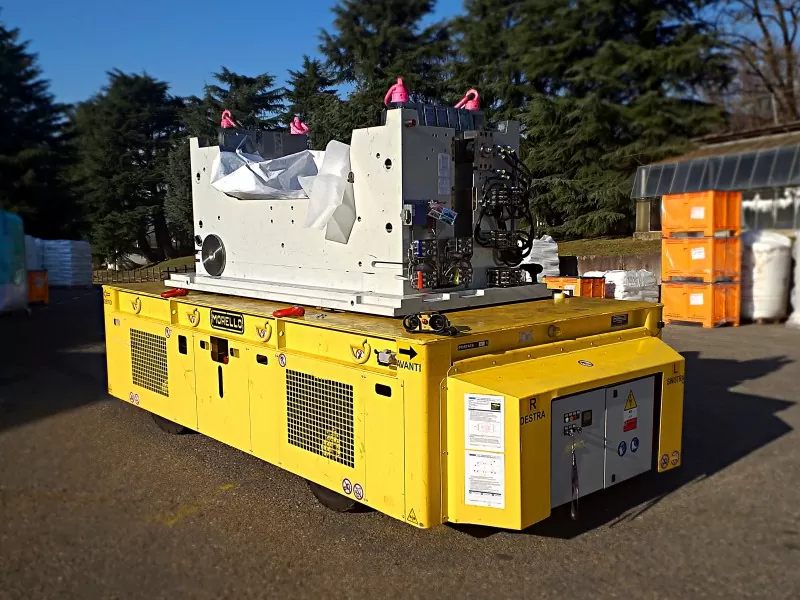
Battery-powered self-propelled trolleys represent one of the safest solutions for transporting extremely heavy loads within industrial facilities, for several key reasons:
- The load is supported by industrial-grade wheels designed for heavy-duty applications
- Operators control the trolley remotely via dedicated control interfaces, remaining at a safe distance
- Loads are positioned in a stable and secure manner on large steel platforms
- Movement is smooth and fully controlled, with safe and gradual braking
Thanks to advanced sensor technology, self-propelled heavy-load trolleys can detect obstacles or personnel along their path and automatically respond to the situation. Depending on the operating environment and application, multiple sensor systems can be integrated into the vehicle to further enhance safety.
Additional advantages include:
- High positioning and movement precision, minimizing the risk of collisions or damage
- Silent operation and zero emissions, thanks to fully electric drives
- No oil leaks or spills, as electric motors replace hydraulic or diesel systems
- Minimal operator training requirements, as the vehicle can be operated efficiently after approximately one hour of basic training.
Morello’s OMNI trolleys feature independent wheel control, with each wheel equipped with its own motor, braking system, and hydraulic height adjustment. This configuration allows the trolley to compensate for uneven floors and slopes while keeping the load perfectly level at all times.
Operation in confined spaces is a standard capability of self-propelled trucks. For applications requiring the highest safety and precision levels, AGV trolleys offer fully automated operation using the most advanced navigation and safety technologies. For hazardous areas, ATEX-certified trolleys are available for use in explosive environments involving volatile substances.
OVERHEAD AND BRIDGE CRANES – HIGHER-RISK HANDLING SOLUTION
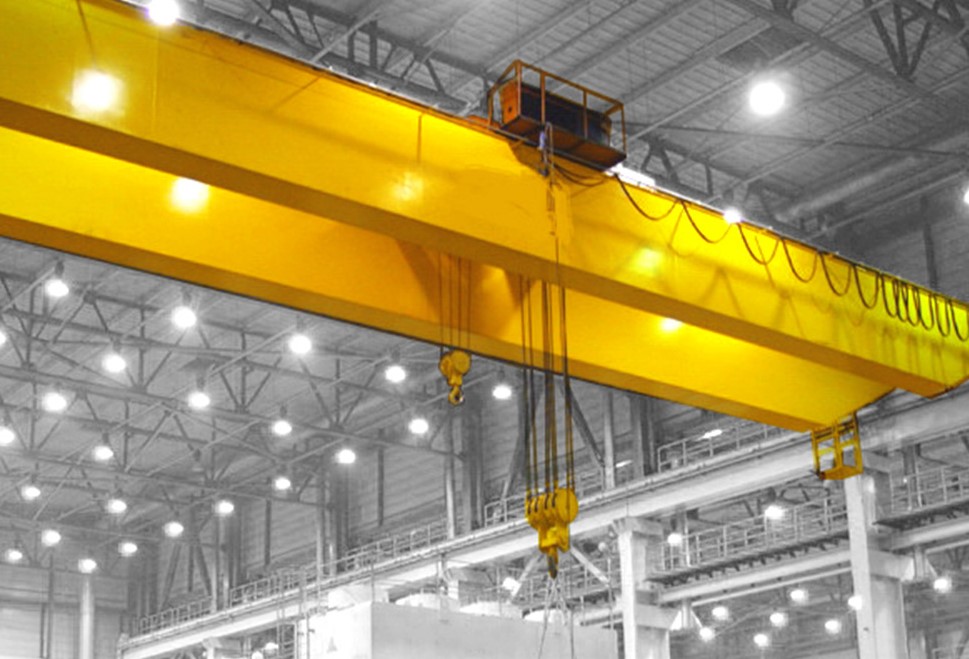
Overhead and bridge cranes are among the highest-risk solutions in heavy material handling and must be operated exclusively by properly trained and experienced personnel. This is essential to prevent damage to loads, plant infrastructure, and most importantly injuries to operators and other personnel.
Crane operations involve lifting loads suspended at height, stabilizing them, minimizing oscillation, and moving them across distances within the facility, often above other equipment or people working in the area.
Chains, slings, and shackles must be carefully selected and rated to withstand extreme loads. However, their use introduces significant risks, particularly during load attachment and detachment, where operators must work in close proximity to both the load and the lifting accessories. Serious injuries, including finger crushing, can occur, and unfortunately, fatal accidents involving cranes continue to be reported in workplaces every year.
LOW-RISK MATERIAL HANDLING ON RAILS
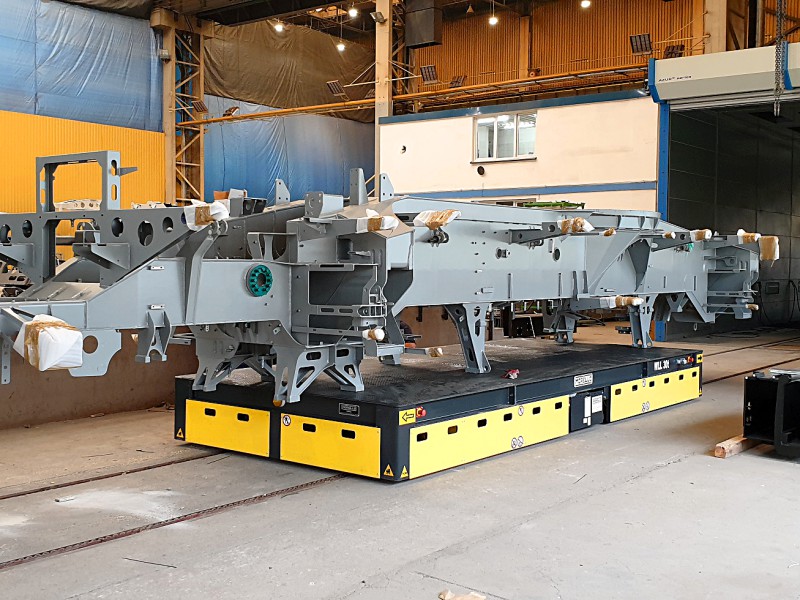
Self-propelled rail-guided trucks can be an efficient solution in certain industrial environments. Compared to wheeled self-propelled trolleys, the primary additional risk is the presence of rails within the working area, which may pose tripping hazards and create obstacles for smaller wheeled equipment.
However, a key safety advantage of rail-based systems is the predictability of movement. Loads travel along a fixed and clearly visible path within the plant, increasing operator awareness and reducing the risk of unexpected movements.
Self-propelled rail-guided trucks can be an efficient solution in certain industrial environments. Compared to wheeled self-propelled trolleys, the primary additional risk is the presence of rails within the working area, which may pose tripping hazards and create obstacles for smaller wheeled equipment.
However, a key safety advantage of rail-based systems is the predictability of movement. Loads travel along a fixed and clearly visible path within the plant, increasing operator awareness and reducing the risk of unexpected movements.
FORKLIFTS AND SAFETY CONSIDERATIONS FOR HEAVY LOADS
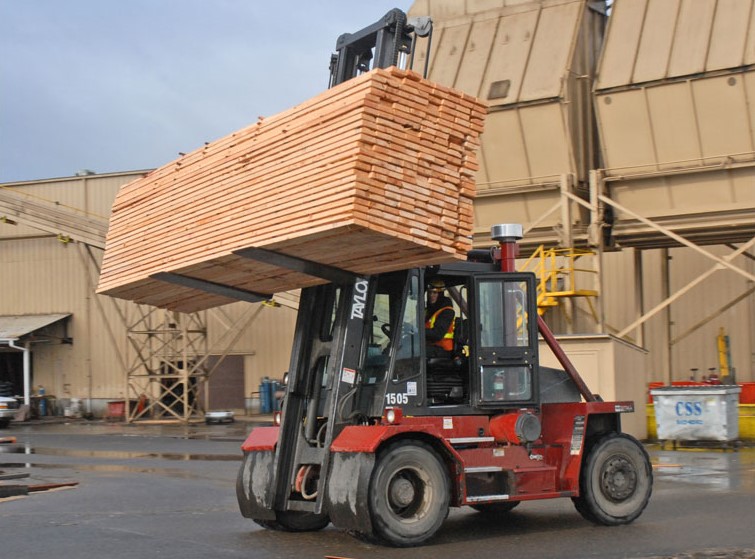
Forklifts are widely used in industrial material handling and, up to certain load limits, can represent a practical and flexible solution. However, when handling extremely heavy loads, the associated safety risks increase significantly.
Many of the safety limitations of forklifts can be eliminated by using self-propelled material handling equipment. Battery-powered trolleys address several critical issues commonly associated with forklift operations:
- Maneuverability and blind spots: Forklifts have limited turning radii at the front, while the rear swings outward during cornering. Transported loads can also obstruct the operator’s field of view.
- Load stability: Risks increase when operating on slopes, wet or oily floors, or uneven terrain.
- Speed-related hazards: Even at low speeds, a forklift carrying a heavy load can cause severe damage, comparable to a vehicle moving at much higher speed.
- Refueling risks: Diesel forklifts refueling introduces additional hazards related to fuel handling and emissions.
SAFETY FACTORS TO CONSIDER
Selecting the right solution for heavy-load material handling requires careful evaluation of multiple safety factors. Safety should always be the primary criterion when making this decision.
If you would like support in assessing your specific application or need guidance to make an informed and confident choice, please contact us. We will be pleased to assist you in identifying the safest and most effective solution for your operation.
Morello Customer Loyalty Team: Amedeo Morello, Luca Tibaldi, Stefano Rizzo.