
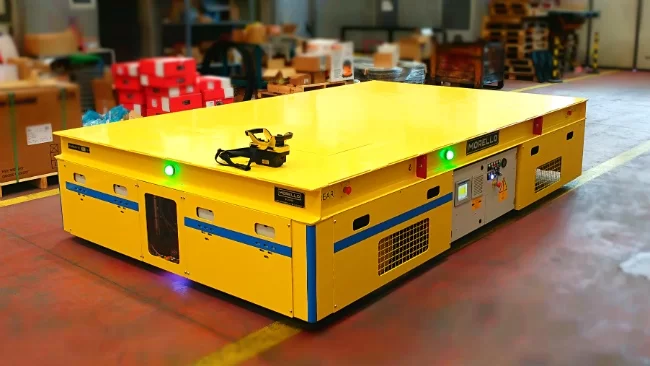
In today’s complex industrial environments, efficient material handling is no longer a luxury—it’s a necessity. Multidirectional heavy-duty movers represent the pinnacle of innovation in large-scale material transport, offering unprecedented flexibility and operational efficiency. These sophisticated machines are specifically engineered to handle substantial loads while navigating through confined spaces with remarkable precision. Unlike conventional material handling equipment, multidirectional movers can maneuver in any direction, eliminating the constraints of traditional movement patterns.
For manufacturing facilities, warehouses, and production plants dealing with substantial components, these versatile machines have become indispensable assets, dramatically reducing reliance on overhead cranes while enhancing workplace safety. MORELLO’s advanced multidirectional heavy-duty movers combine cutting-edge technology with robust engineering to deliver solutions that transform industrial operations, increase productivity, and provide a significant competitive advantage in materials handling challenges.
Multidirectional heavy-duty mover for industrial applications
Industrial facilities face growing challenges in material handling as production scales and manufacturing complexity increases. The multidirectional heavy-duty mover represents a significant advancement in addressing these challenges, offering unprecedented flexibility for operations that require movement of substantial loads across factory floors. These specialized vehicles are engineered to handle weights of 20 tons or more while providing omnidirectional movement capabilities that traditional handling equipment simply cannot match.
What distinguishes these systems is their ability to navigate in any direction without the constraints of conventional steering systems. This allows for precise positioning in congested spaces, maximizing facility layout efficiency and minimizing the footprint required for maneuvering large components. For manufacturing operations dealing with oversized materials, this translates directly to improved throughput and reduced bottlenecks.
Beyond mere transportation, these movers serve as complete material handling solutions by incorporating lifting capabilities that eliminate dependency on overhead cranes. This dual functionality not only streamlines operations but significantly enhances workplace safety by reducing suspended load hazards—a primary concern in heavy industrial settings.
The integration of battery power systems further enhances the versatility of these movers, allowing them to operate independently throughout facilities without the constraints of power cables or pneumatic lines that would otherwise limit their range and application flexibility.
The transformative capabilities of multidirectional heavy-duty movers
When industrial operations rely on overhead cranes for material movement, they face significant workflow limitations. Multidirectional heavy-duty movers fundamentally transform this paradigm by introducing capabilities that dramatically enhance operational efficiency. The most significant advantage comes from their self-loading functionality, which allows these machines to position themselves beneath loads, elevate them by approximately 200mm, transport them to the desired location, and then safely lower them into position.
This self-sufficiency eliminates scheduling bottlenecks commonly associated with shared crane resources. In facilities where multiple departments compete for limited crane availability, the introduction of multidirectional movers can reduce wait times from hours to minutes, directly impacting production schedules and delivery timelines.
The safety implications are equally compelling. By keeping loads close to the ground rather than suspended overhead, these systems significantly reduce the risk envelope associated with material transport. This creates a safer working environment while simultaneously allowing operations to continue in adjacent areas that would typically be cleared during overhead lifts.
Perhaps most importantly, these movers enable new facility layout possibilities that weren’t previously viable. With the ability to maneuver in confined spaces and navigate through areas inaccessible to cranes, companies can optimize their floor plans for production efficiency rather than material handling constraints. This spatial freedom has allowed many manufacturers to reconfigure production lines, consolidate operations, and utilize building square footage more effectively—delivering ongoing operational benefits beyond the immediate material handling advantages.
Engineering excellence: how electric heavy-duty movers function
The engineering behind a 20-ton capacity electric heavy-duty mover represents a sophisticated balance of power, precision, and structural integrity. These industrial workhorses utilize distributed weight management systems that allow them to support massive loads while maintaining maneuverability. The core structure typically incorporates a reinforced steel frame with load-bearing components strategically positioned to maintain stability during both stationary and dynamic operations.
Power delivery comes from advanced AC drive motors, specifically designed for high-torque applications. Unlike conventional industrial vehicles, these specialized motors provide the necessary force to initiate movement from a complete stop—even when fully loaded—without the jerking motion that could destabilize sensitive cargo. The drive system typically incorporates multiple independent motors to ensure redundancy and balanced power distribution.
The lifting mechanism represents another engineering achievement, utilizing hydraulic or electromechanical systems capable of raising 20-ton loads with millimeter precision. This precision is crucial when positioning components for assembly or when navigating loads through tight clearances in manufacturing environments.
Control systems integrate multiple sensors monitoring weight distribution, platform angle, speed, and proximity to obstacles. This sensor network feeds into sophisticated control algorithms that make real-time adjustments to ensure safe operation regardless of load characteristics or facility conditions. MORELLO’s implementation of these systems demonstrates particular excellence, with their movers featuring intuitive operator interfaces that simplify complex maneuvers despite the substantial engineering complexity working behind the scenes.
Advanced steering technologies that revolutionize warehouse navigation
The true innovation of multidirectional heavy-duty movers lies in their revolutionary steering capabilities. Unlike conventional material handling equipment constrained to forward and backward movements with wide turning radiuses, these advanced systems employ independently controlled wheel units that transform how industrial spaces can be navigated.
Each wheel module operates as a self-contained steering and drive unit, capable of rotating 360 degrees independently of the others. This independence creates unprecedented maneuverability through five distinct steering modes:
- 90° Steering (Crab Movement): Allows the mover to travel sideways without changing the orientation of the load—ideal for navigating narrow aisles or positioning alongside assembly lines.
- Diagonal Steering: Enables movement at any angle, optimizing the path between points while navigating around obstacles.
- Carousel Steering: Rotates the entire vehicle around its center point, perfect for reorienting loads in confined spaces.
- Compass Steering: Permits rotation around any selected point, allowing precise positioning relative to fixed equipment or assembly components.
- Ackermann Steering: Provides traditional vehicle-like steering for efficient long-distance transport across open factory floors.
These steering technologies create extraordinary spatial efficiency in warehouses and production facilities. Spaces previously considered unusable due to maneuvering constraints become viable for operations. The system’s precision also reduces the clearance needed around stored materials, effectively increasing storage capacity without facility expansion. For operations handling large components in space-constrained environments, this technological advancement transforms what was previously impossible into standard procedure.
Battery power innovations in heavy-duty material handling equipment
The evolution of battery technology has dramatically transformed the capabilities of multidirectional heavy-duty movers, enabling these massive machines to operate with the freedom and flexibility previously impossible with tethered power systems. Traditional lead-acid batteries have long served as the standard power source, providing reliable performance for basic operations. However, the demands of modern industrial environments have driven significant innovations in this critical component.
Lithium-ion battery systems represent the most significant advancement, offering multiple advantages that directly impact operational efficiency. The most obvious benefit is the dramatic reduction in charging time—from approximately eight hours with conventional batteries to just two hours with lithium systems. This translates to substantially higher equipment availability and utilization rates, particularly in multi-shift operations where downtime directly impacts productivity.
Beyond charging speed, these advanced battery systems deliver more consistent power output throughout the discharge cycle. While lead-acid batteries experience voltage drops as they deplete, lithium systems maintain stable performance until nearly fully discharged. This consistency is crucial when handling precision movements with substantial loads, where power fluctuations could compromise positioning accuracy.
The energy density improvements also allow for extended operational range, with some systems capable of traveling up to 5 kilometers on a single charge while handling full-capacity loads. For large facilities, this extended range eliminates the need for strategic charging stations throughout the operation, simplifying infrastructure requirements and increasing flexibility in deployment. MORELLO’s implementation of these battery innovations ensures their multidirectional movers deliver reliable performance throughout extended operational periods.
Integrating AGV functionality for complete automation solutions
The integration of Automated Guided Vehicle (AGV) capabilities represents the pinnacle of multidirectional heavy-duty mover evolution, transforming these already sophisticated machines into fully autonomous material handling solutions. By incorporating advanced navigation systems, these movers can follow predetermined paths throughout industrial facilities without operator intervention, creating new possibilities for workflow optimization and labor allocation.
The optical guidance system represents one of the most reliable and cost-effective implementation approaches. Using specialized sensors, the mover detects colored stripes or patterns applied to the facility floor, following these markers with exceptional precision. This method requires minimal infrastructure changes while providing reliable navigation even in challenging industrial environments with varying lighting conditions or surface types.
Beyond simple path following, modern AGV implementations incorporate obstacle detection and avoidance capabilities. Using a combination of sensors—including ultrasonic, LiDAR, and camera systems—these autonomous movers can identify unexpected obstacles, pause operations, and either navigate around obstructions or signal for assistance when necessary. This intelligence ensures safe operation in dynamic environments where personnel and other equipment may be present.
The operational benefits extend well beyond labor savings. AGV-equipped multidirectional movers enable truly continuous operations, maintaining consistent material flow between production stages without the variability inherent in manual operations. This predictability enhances production planning capabilities and enables tighter integration with manufacturing execution systems. For industries with high-value components and stringent traceability requirements, the elimination of human handling also reduces damage risk while creating digital documentation of material movements throughout the facility.
Elevating industrial material handling with multidirectional innovation
Multidirectional heavy-duty movers represent a transformative approach to industrial material handling challenges, combining unprecedented maneuverability with robust load capacity. These sophisticated machines eliminate traditional constraints, allowing operations to optimize workflows, enhance safety, and maximize facility utilization. With their self-loading capabilities, advanced steering systems, and potential for automation, these movers deliver comprehensive solutions that address the evolving demands of modern manufacturing and logistics environments.
MORELLO stands at the forefront of this technological evolution, delivering customized multidirectional movers that precisely match the unique requirements of operations across diverse industries. Our engineering expertise ensures that each system integrates seamlessly into existing workflows while providing the reliability essential for mission-critical material handling tasks.
Ready to revolutionize your material handling capabilities? Explore MORELLO’s complete range of multidirectional heavy-duty movers and discover how our tailored solutions can transform your operational efficiency and competitive advantage.